Tesla targets production of 20,000 Optimus robots a week
Tesla aims to reach 20,000 humanoid robots a week. Musk describes a gradual production ramp, while estimates of supplier revenue remain conditional.
More
Tesla aims to produce 20,000 Optimus humanoid robots a week. According to the transcript of its third-quarter 2026 earnings call, Elon Musk presented that target while warning it could take at least a year, possibly longer, to achieve. This is a planned production rate, not an achieved result.
Od početne proizvodnje do velikih serija
In its official third-quarter report, Tesla says Optimus production has begun in Fremont. It describes the facility as being in an early ramp-up phase. Starting production lines is not the same as delivering robots to customers at scale.
Musk stressed that the robot’s design is still changing and that scaling production depends on developing the factory and supply chain. He described a gradual acceleration, with difficulties typical of a complex new product.
A rate of 20,000 robots a week equates to roughly one million annually only if maintained for an entire year. Reaching that rate late in 2027 would not mean one million robots had been produced during 2027.
Robotics otvara prostor i proizvođačima čipova
A humanoid robot requires computing, sensors, motor control and power management. The market opportunity therefore includes components that connect computational decisions to physical movement.
In an official March 2026 announcement, Texas Instruments describes a robotics collaboration with NVIDIA. TI contributes motor-control, sensing and power technologies, while NVIDIA provides the computing platform. These are complementary technologies: claiming TI is replacing NVIDIA creates a misleading impression. The collaboration itself does not establish which electronics Optimus uses.
Procjene prihoda ovise o ostvarenju planova
The investment website The Motley Fool estimates that producing one million Optimus robots annually could generate an additional $250 million to $500 million in annual revenue for Texas Instruments. It assumes TI components worth $250 to $500 per robot.
That is the author’s conditional estimate, not a confirmed contract value or realised revenue. It depends on Tesla’s production volume, component quantities and prices, and the supplier relationship continuing. The official sources checked do not confirm a detailed list of TI components in Optimus.
AI Revolucija Analysis:
Plans for million-unit humanoid production raise the question of how prepared we are for these machines in working and everyday life. Unit counts alone do not show whether robots can reliably operate alongside people.
Alongside production targets, we need evidence of which tasks robots perform independently, when they need human help and who is responsible for mistakes. Wider adoption increases the importance of safety, oversight and consequences for workers. Industrial progress acquires social value when accompanied by clear responsibility and demonstrable benefit.
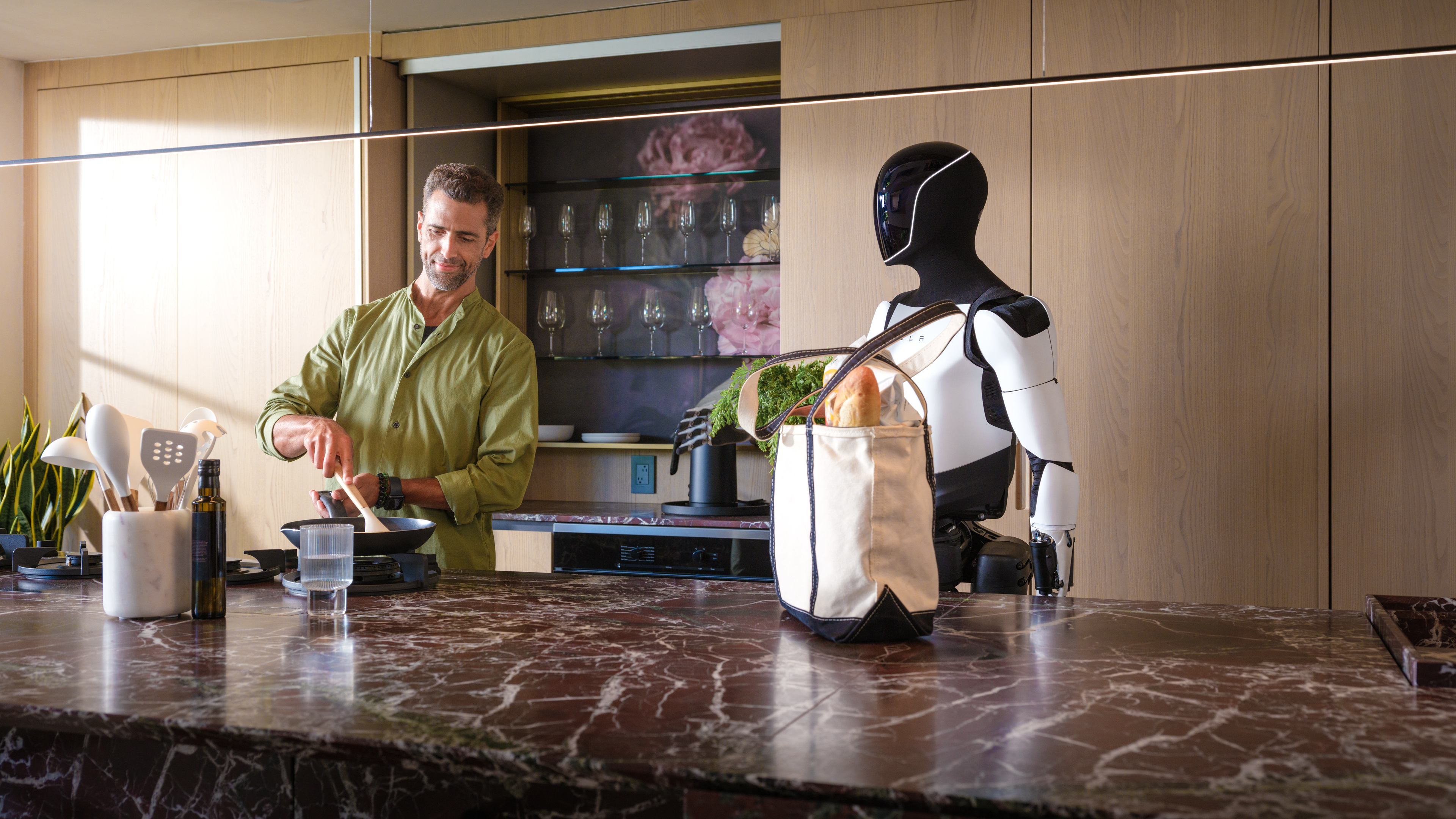
Production targets and timelines are announcements. The TI revenue estimate comes from investment commentary, not company guidance. A promotional photograph does not demonstrate task autonomy.
Sources and verification
About this article
Report type: ROBOTICS / BUSINESS PLANS.