NVIDIA unveils GR00T 2: what can a robot really learn from a few demonstrations?
How do we distinguish a successful demonstration from dependable work?
More

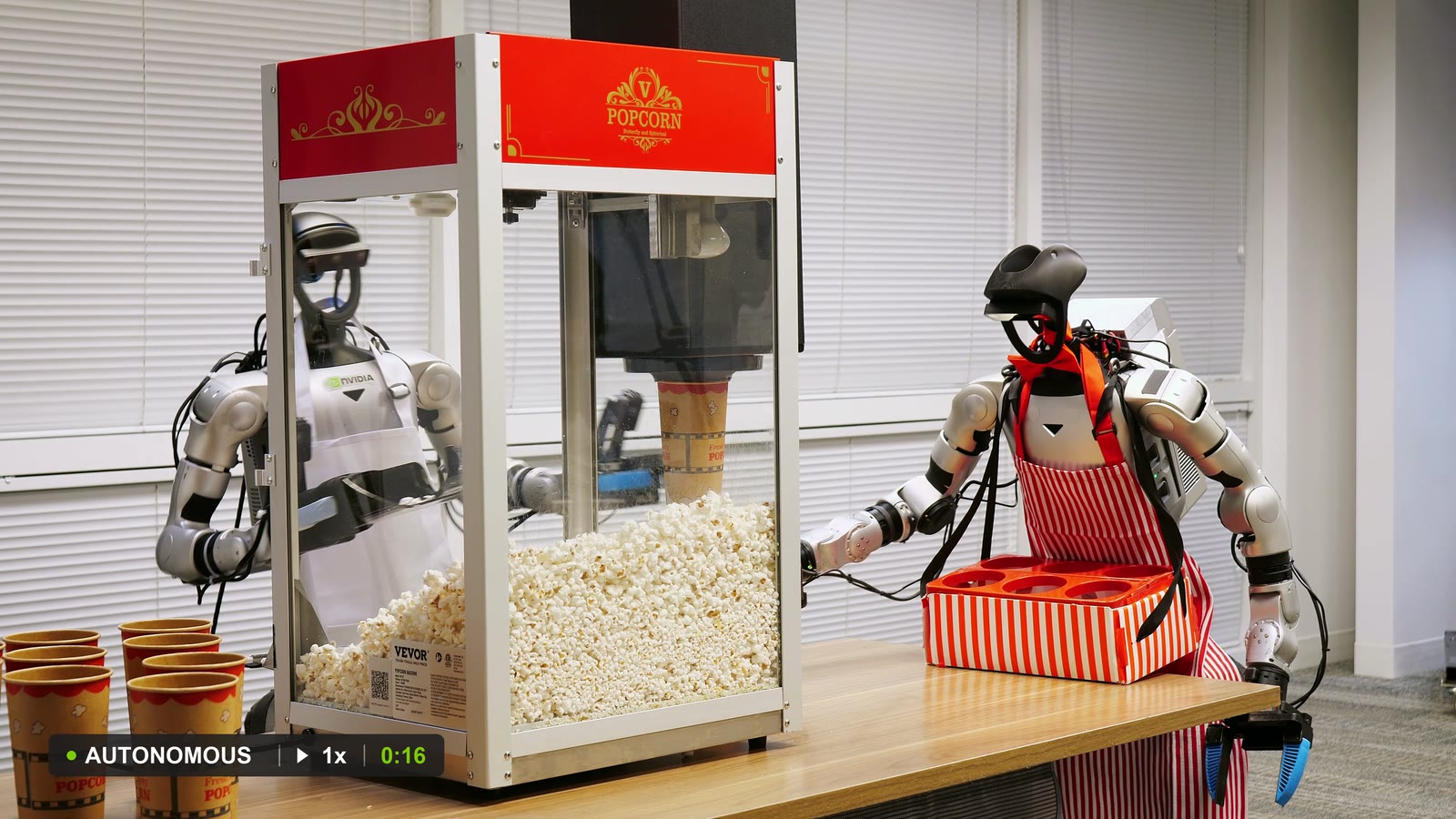
NVIDIA introduced GR00T 2 on 9 November. In its evaluation, the model completed 40 of 50 tasks at least once without task-specific demonstrations. That does not mean 80 percent reliability across attempts.
The company reports average success of 71 percent with one demonstration per task and 95 percent with five. The announcement and partner trials do not establish general commercial availability of a finished robot in Croatia or the EU.
AI Revolucija Analysis:
For a worker standing beside a robot arm, when it fails matters more than its best attempt. An average can conceal the rare situation in which a person must intervene. Transferring a demonstrated skill to a machine should therefore be accompanied by clear obligations for manufacturers and employers: who defines safe conditions, records failures and allows work to stop? Executing a movement successfully demonstrates control capability; it does not, by itself, demonstrate understanding of consequences or moral responsibility. Progress towards a useful robot also depends on whether its mistakes are predictable, stoppable and explainable to the people working alongside it.
The figures come from the manufacturer and have not been independently reproduced here. They do not establish reliability beyond the tested conditions or universal autonomy.
Sources and verification
About this article
Report type: OFFICIAL ANNOUNCEMENT / MANUFACTURER RESULTS.