About the portal.
AI Revolucija is a Croatian news and analysis publication dedicated to artificial intelligence, large language models, robotics and their impact on everyday life, work, education and society.
Alongside news, we publish analysis and interviews with experts from Croatia and around the world.
Editorial team.
Professor Emeritus Igor Čatić
Professor Emeritus Igor Čatić
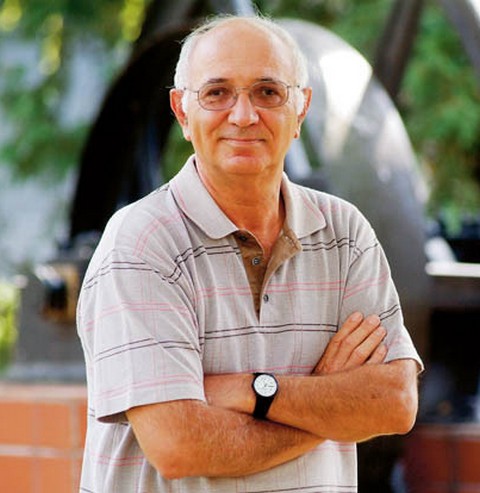
Professor Emeritus Igor Čatić, PhD, was born in Zagreb on 14 March 1936. A founder of polymer science in Croatia, he has worked across mechanical engineering, systems theory of production, lexicography, philosophy of technology and integrative bioethics.
Čatić began training as a toolmaker in 1951 and qualified in 1954 while completing secondary school. This practical experience shaped his approach to engineering. He graduated from the University of Zagreb’s Faculty of Mechanical Engineering and Naval Architecture in 1960. After working in industry, including at the Zagreb Pencil Factory, he joined the faculty in 1965. He held DAAD and Alexander von Humboldt scholarships and earned his doctorate at RWTH Aachen in 1972.
Čatić helped establish university teaching in the manufacture of plastic and rubber components and led the faculty’s chair of polymer processing. He became a full professor in 1986 and retired in 2006.
His textbooks and monographs address heat transfer in injection moulds, systems analysis of polymer injection moulding, and the injection moulding of polymers and other materials. He supervised engineering students and postgraduate researchers, and his students received university awards.
A founder of the Society for Plastics and Rubber, he helped launch Polimeri and served as its international editor for many years. He contributed to the Struna terminology project and wrote encyclopaedia entries. With his wife Ranka Čatić, he compiled ERPOHEN, a Croatian–English–German dictionary of polymer science and engineering.
His later work explored the social and philosophical implications of technology. He introduced a course on technology at the Zagreb faculty and led the research committee on bioethics, technology and transhumanism at the Centre of Excellence for Integrative Bioethics. A regular participant in the Lošinj Days of Bioethics, he examined the relationships between technology, medicine, cybernetics and humanity’s future.
His honours include the Nikola Tesla Award, a Croatian national award for science communication, an education award from the US Society of Plastics Engineers, a Croatian state decoration and the national lifetime achievement award in engineering sciences for 2015. That year, the University of Zagreb Senate named him professor emeritus.
Since retiring, he has continued to speak at conferences and publish, particularly on the role of tools in human activities involving materials and information.
Assistant Professor Nenad Vertovšek, PhD
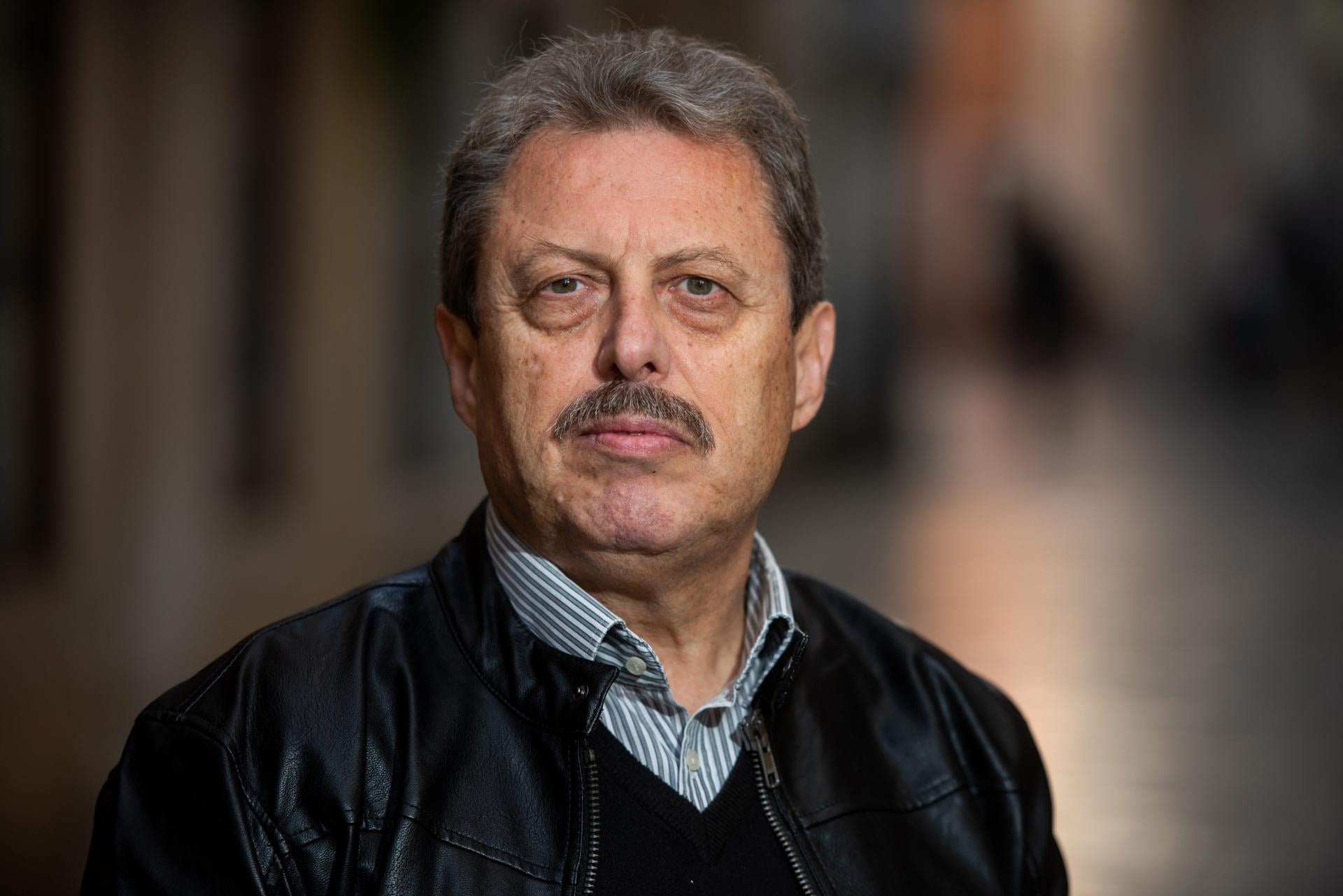
Nenad Vertovšek, PhD, is a journalist, editor, communication scholar and philosopher whose media career has shaped his research and teaching.
He began working for Zadar’s Narodni list in 1981. In March 1988 he joined the Zadar bureau of Slobodna Dalmacija as a senior contributor and commentator. He became editor-in-chief of Zadarska televizija in 1996 and returned to Slobodna Dalmacija from 1998 to 2008.
He subsequently wrote freelance for publications including Zadarski list, Croman, UT – ugostiteljstvo i turizam, Privredni vjesnik and Profit.
A member of the Croatian Journalists’ Association since 1985, he chaired its county council in Zadar and served on its central committee. He was also active in the International Organization of Journalists. Through journalism workshops he taught young reporters media ethics, media literacy and critical thinking.
After studying political science at the University of Zagreb, he earned a doctorate in philosophy at its Faculty of Humanities and Social Sciences in 2015 with a dissertation on the critique of contemporary mass media. As a university lecturer with the academic title of assistant professor, he taught journalism, public relations and mass communication.
His writing examines media manipulation, Noam Chomsky’s account of how we perceive reality, and the future of communication.
He wrote Drveno željezo medija and co-authored Mladi i mediji, Mladi – odgoj za medije and Tamna strana ekrana. With Associate Professor Ivana Greguric, he wrote Filozofija budućeg: Ogledi o neljudskom and Philosophies of the Future and the Non-Human. His years in journalism continue to inform his teaching and research.
Our aim is to follow technological change, understand it, explain it and make room for informed public debate.
What we publish.
01AI Lab.
What would you entrust to AI?Here you take part. Test what AI can take on and decide where your responsibility begins.
Try
01Follow
06Watch
10Our principles.