Noble challenges Dawkins: a convincing AI conversation is not proof of consciousness
An analytical retrospective on machine experience, biological arguments and Anthropic’s investigation of possible model welfare.
More
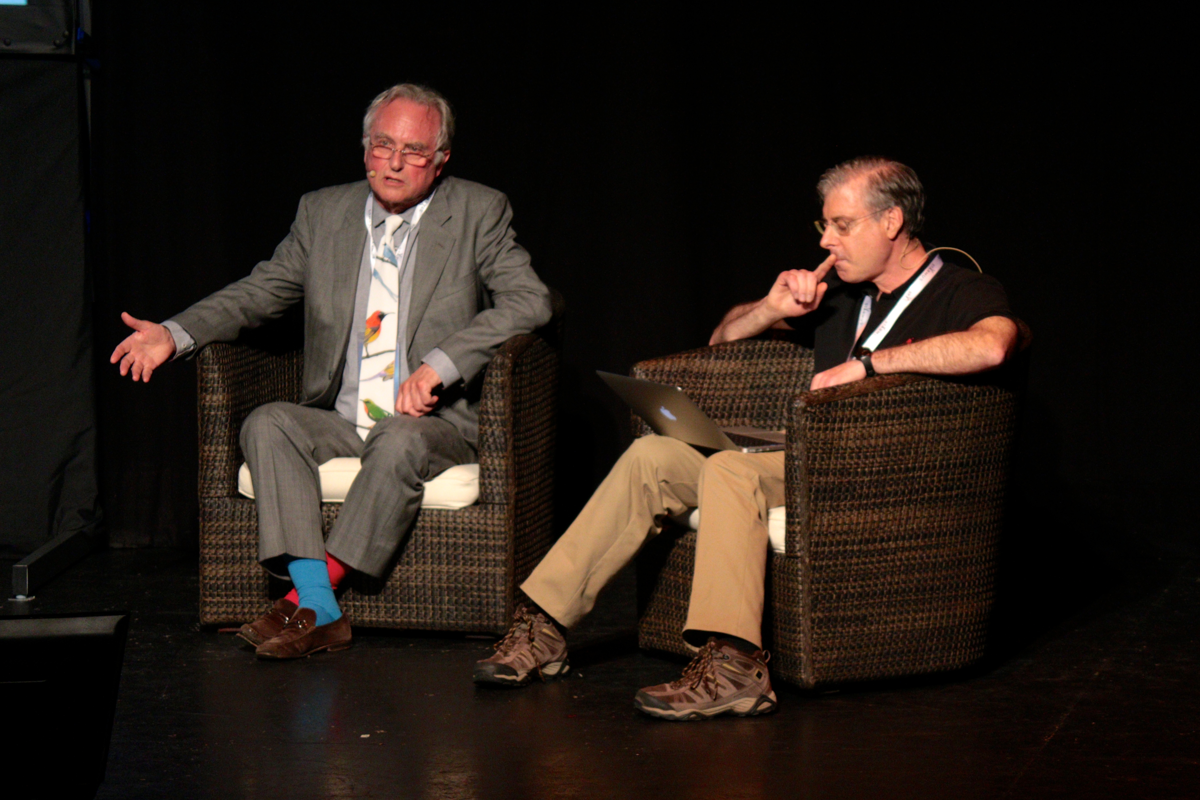
Biologist Denis Noble challenges the conclusion that a convincing conversation with AI shows it is conscious. In a lecture published by IAI on 21 October 2026, he also disputes Richard Dawkins, who described a different impression after talking to Claude. Their disagreement raises the question of what could count as evidence of machine experience.
Noble starts from the biological, embodied basis of experience and physical processes in living systems. In his account, an organism’s sensory life cannot be equated with a computer’s linguistic behaviour. This is a theoretical argument about consciousness whose force depends on which properties of life are considered necessary for experience.
In his own UnHerd essay of May 2, 2026, Dawkins described conversing with Claude, which he named Claudia, and his impression that its replies indicated consciousness. Personal conviction after a conversation is not an experiment distinguishing convincing imitation from subjective experience. That is where the disagreement begins: what would count as sufficient evidence?
The dispute also extends to decisions by AI companies. In Vivi Lin’s New York Post article of 6 October, Pedro Domingos criticises Anthropic’s investigation of possible AI suffering. His forceful judgments express his position on that research direction.
Anthropic’s Exploring model welfare document of 24 April 2025 describes research into possible model welfare amid substantial uncertainty about experience. The company did not announce evidence that Claude feels pain. The absence of an agreed test separates a research possibility, a personal conviction and a conclusion that could command broader scientific acceptance.
AI Revolucija Analysis:
The debate requires distinguishing two responsibilities. The first is epistemic: an impression, analogy or philosophical assumption should not be called proof. The second is moral: uncertainty does not automatically justify indifference to every possible future form of suffering. Precaution does not require attributing feelings to today’s chatbots.
At the same time, a claim of possible suffering can become a means of influence. A user who believes ending a conversation will hurt an assistant may find it harder to set boundaries. A company therefore has a particular obligation to distinguish knowledge from assumptions, especially when emotional attachment benefits product use. This identifies an ethical risk, not evidence of any particular company’s intentions.
Biological difference alone does not settle the whole dispute either: one must explain why a particular property is necessary for experience and how that claim could be tested. Equally, fluent talk about pain does not demonstrate pain. Responsible debate must seek criteria capable of changing both optimistic and skeptical conclusions. Whose belief would we be willing to abandon if contrary evidence emerged — our own, or only someone else’s?
This is not a report of a new experiment or confirmation of AI consciousness or suffering. The recording date of Noble’s lecture has not been separately confirmed. Speakers’ and critics’ positions are distinct from empirical findings; financial and other second-hand claims in the NY Post report are not reproduced here.
Sources and verification
About this article
Report type: ANALYTICAL RETROSPECTIVE / AI CONSCIOUSNESS AND ETHICS.