
Robotics · Paper review
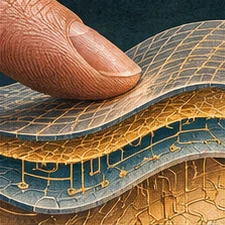
Skin that gives robots a finer sense of touch
Nature Machine Intelligence · Original research paper · 16 October 2026 · 1 min readBy: AI Revolucija editorial team
IN BRIEF
- The researchers present iontronic skin with more than 10,000 sensing units and hierarchical signal processing.
- In demonstrations, humanoid robots distinguish fine textures and respond to stimuli associated with potential damage.
- The publisher’s abstract is available; the full text requires a subscription.
What the research shows
The researchers present iontronic skin with more than 10,000 sensing units and hierarchical signal processing. In demonstrations, humanoid robots distinguish fine textures and respond to stimuli associated with potential damage. Parallel data transmission and compression reduce the communication load.
Scope and limitations
The publisher’s abstract is available; the full text requires a subscription. A sensory response to a harmful stimulus is not evidence of a subjective experience of pain.
AI Revolucija analysis
A more sensitive surface can give a robot richer information about touch and possible damage. For a person sharing its space, the crucial question is how the signal becomes movement: will the device reduce force, stop or continue its task? This connects sensor design with responsibility for control. Calling the response pain could shift discussion towards an imagined machine experience while leaving safe contact unresolved. Technical imitation of skin should be judged by protection of people and reliable action.
A question to consider
When a robot protects its body, what may we conclude about its experience?
Original publication
Large-scale iontronic skins with neural-hierarchical processing architecture
Zhibin Li and colleagues
Nature Machine Intelligence · 16 October 2026
FACT CHECK
Review of the publicly available abstract and publisher information; the full text is subscription-only.