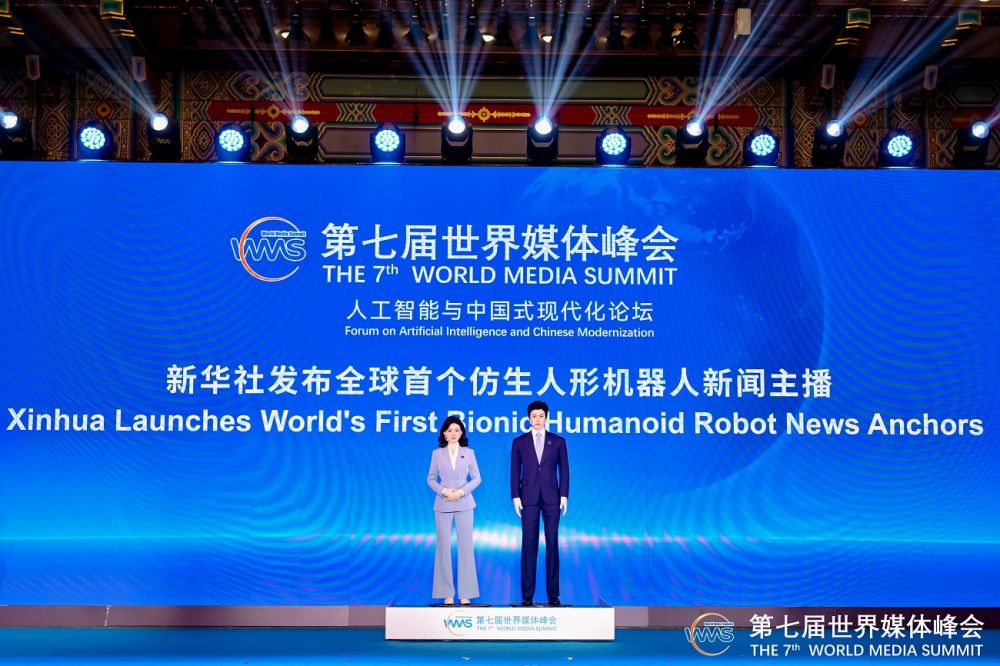
XPeng is sending a humanoid to its car showrooms
After taking the stage in Guangzhou, IRON is due to greet customers in China in early 2027, with overseas showrooms to follow.
This article was generated using AI.
More
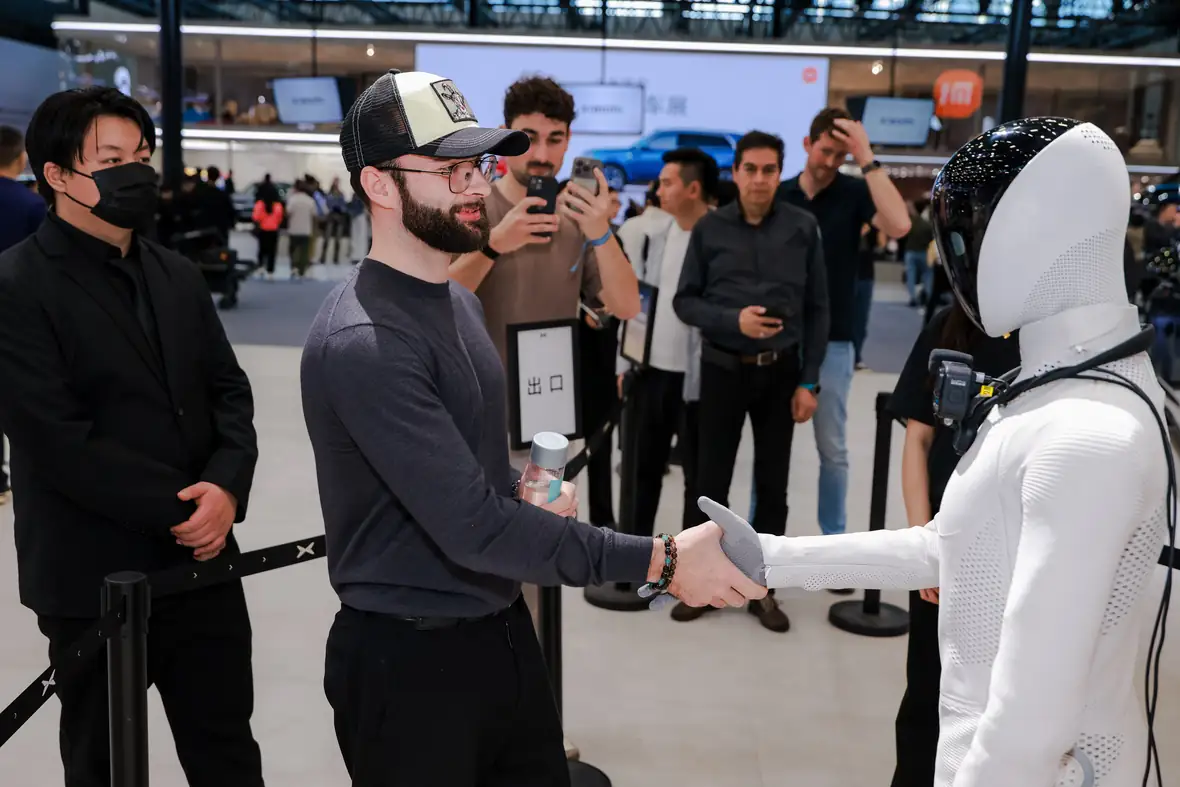
At the Guangzhou Auto Show, one electric carmaker handed its press conference over to a humanoid. IRON represented China’s XPeng on stage, greeted visitors off it and helped introduce the technology on display. The company has already picked the robot’s next workplace. In the first quarter of 2027, IRON is due to begin training as a sales assistant at XPeng showrooms in China.
A stage appearance has a running order and an ending. A customer can take a conversation anywhere. Someone might ask about a car’s range, then mention living in a flat with nowhere to charge it and driving across a mountain pass in winter. The question has become a good deal more personal. What this customer wants is help deciding whether the car will work for them.
At its first appearance in Guangzhou, IRON had a familiar interlocutor. Footage carried by Xinhua shows the robot interacting on stage with XPeng chairman He Xiaopeng. The company’s account from the motor show describes its subsequent role as a host. A stage appearance lets spectators see how the machine walks and talks. A showroom gives them time to ask a follow-up, revisit yesterday’s answer or ask to see the document behind a price. A misunderstanding can outlast the demonstration that produced it.
XPeng set out its timetable at its technology event on 25 November and filled in the details at the motor show two days later. After training begins in its Chinese stores, the company is aiming for an official product launch in the second quarter. In the second half of 2027 it intends to bring IRON to its own overseas showrooms. The announcement did not identify the first European stores where customers might encounter one.
Why would a car manufacturer build its own sales assistant? Developing cars has already given XPeng computing hardware, testing procedures and experience handling data. It is putting some of that infrastructure to work on robots. The company says its robotics data centre covers more than 250 scenarios across 15 kinds of job. Its figures give no indication of how many involve talking to a dissatisfied customer. That conversation could reveal more than another successful tour of a showroom.
The customer has a follow-up question
Some of the abilities that matter on a shop floor are easily missed at a press conference. XPeng says IRON can find its own way around, return to its charger and report a problem with its operation. For an employee attending to several customers, an assistant like that might save journeys between cars. The company has yet to say how often during a shift an employee has to break off a conversation to help the robot.
Customers can open the boot and see for themselves whether a pushchair fits. A range claim is a different matter. They must decide how far to trust a figure they cannot check on a single test drive. An employee who shows them what the factory measurement covers and why their own motorway journey might yield a different result has given them a useful answer. Whether IRON can do the same when a question departs from the examples it has learned will take time in a working showroom to establish.
The showroom will also give XPeng a chance to measure how much the speaker’s appearance affects the weight customers give its words. In a driving simulator, psychologists Adam Waytz, Joy Heafner and Nicholas Epley compared autonomous vehicles with equal driving abilities. Participants trusted the one given human characteristics, including a name and a voice, more readily. The researchers were studying drivers’ trust. How people respond when a humanoid addresses them during an actual purchase is still an open question.
The researchers also introduced an event that might shake that trust. A car coming the other way caused a collision. Participants whose own vehicle had spoken to them and had a name assigned it less blame than those riding in an equally capable autonomous car without those features. Both groups had been through almost the same event. What differed was the account people gave of it afterwards.
AI Revolucija Analysis:
Whose interests does a courteous salesperson serve?
A salesperson’s courtesy has value even when we know their job is to sell us a car. An experienced employee might listen to a customer describe their commute and suggest saving the money because the more expensive battery would do little for them. The customer recognises a judgement made in their interest, possibly at a cost to the dealership. A humanoid could deliver the same sentence in just as warm a voice. Who gets to decide when it can say it?
Whom is the customer trusting in that conversation? They can quite reasonably trust a machine to read out a price list accurately while doubting that the most expensive option is best for their family. In their research review on automation, John Lee and Katrina See argued for matching trust to what a system can reliably do. Customers need room to decide how far their agreement extends. Listening to an explanation about a battery commits them to nothing.
That gets harder if sales figures decide in advance what counts as a good conversation. Someone who walks away after an honest explanation may have received the best service on offer. In the dealership’s records the visit ended without a contract. If the system learned solely from completed sales, its most persuasive answer might win out over its most useful one. The measure chosen tells us something about the intentions of the people who put the robot there, however human its voice sounds.
There is a practical way to test this. Customers could describe the same difficult journey and the same family budget to a robot and to an employee in separate conversations. Afterwards they could write down what was promised, which options were offered and which claims they managed to check for themselves. Comparing those accounts with the written terms of sale would show whether the conversation helped them decide, and whether any advice sounded more convincing than it deserved.
Such a trial should include customers with quite different habits. Someone embarrassed to ask a salesperson for the third time what the warranty covers might welcome a machine patient enough to let them keep asking. Someone else may only get to the heart of the matter when an employee lets them tell the story in their own time. The value of a humanoid depends partly on whether the customer can choose between those conversations.
Perhaps the most valuable thing IRON could say in a showroom is an invitation to wait while it checks something with a colleague. The customer would get expert help. An employee would have the authority to correct the recommendation in front of the person who will bear its cost. Whether she has the time for that conversation is up to the employer who draws up the rota.
Sources and verification
About this article
Report type: News report.