
Signal’s president warns: danger also lies in the people deciding how we use AI
In October interviews, Signal’s president focused on reckless AI deployment, privacy and concentrated power. We revisit her arguments and ask what meaningful human oversight requires.
More
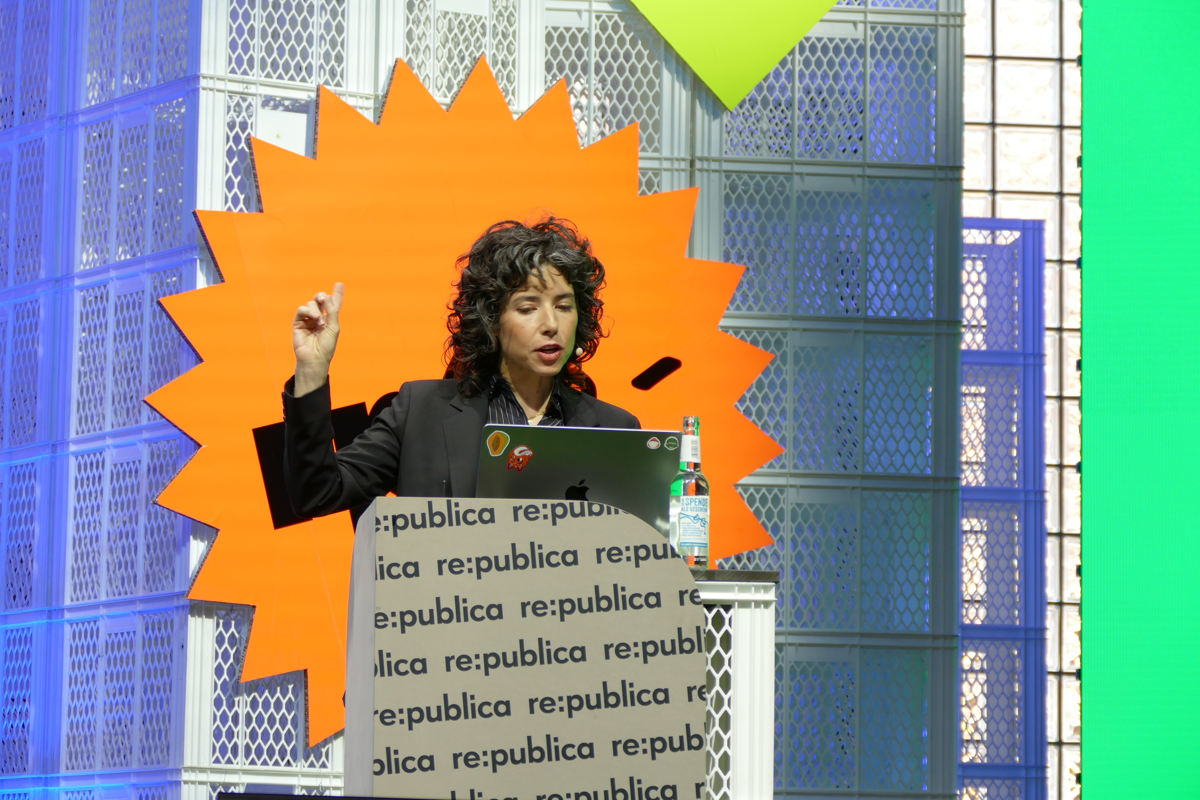
The danger of artificial intelligence does not necessarily begin when a machine becomes independent. For Signal president Meredith Whittaker, an immediate concern is the people and institutions deploying technology carelessly in sensitive systems. That is the central message of her BBC Global Women interview, carried by Today on October 18, 2026. She challenges AI rebellion scenarios and emphasizes deployment risks. This article revisits an earlier interview; it does not report a statement made today.
Her intervention requires a precise reading: it expresses an interviewee’s position and priorities. An interview is not a scientific evaluation establishing that long-term risks do not exist. Taking future system capabilities seriously is compatible with demanding accountability for present deployment decisions.
In a separate interview published by Big Think on October 21, Whittaker connects AI development with data-collection business models and concentrated infrastructure. She particularly challenges the assumption that using a platform means accepting all its practices: people may depend on a service because their social lives take place there. This is her interpretation of power relations, not a measurement of every user’s views.
Signal’s own documentation provides practical context. The company says it uses end-to-end encryption and does not sell, rent or monetize personal data or content. It also warns that users must secure their devices. Protecting a communications channel therefore does not promise that every device or user decision is safe.
Imagine an official receiving a persuasively presented system recommendation without enough time to examine its underlying data. This is an illustrative example, not a documented incident. It shows why saying that a human has the final word leaves the essential question unanswered: does that person actually have the conditions needed to challenge the system?
Playing loads YouTube. · YouTube naslovnica · Kritzolina / Wikimedia Commons · CC BY-SA 4.0 · Archival photograph
Meredith Whittaker · BBC News interview
BBC News · October 2026
Original BBC interview from October 2026; the interviewee’s views, not an independent scientific evaluation.
Open the original video ↗AI Revolucija Analysis:
Editorial analysis: human oversight means more than placing a person at the end of a procedure. It requires access to the reasons behind a decision, enough time for verification and the authority to reject a recommendation. If an institution rewards speed and treats doubt as an obstacle, it formally retains a human in the process while weakening that person’s capacity for judgment.
Privacy poses a similar dilemma. Consent is less free when refusing a service means losing an important space for work or belonging. This does not make every use of technology coercive. It means an ethical assessment must consider available alternatives and the cost of refusal, rather than simply checking whether an acceptance button exists.
Whittaker’s argument deserves serious attention without becoming a final verdict on every AI risk. Criticism of concentrated power and research into future dangers can complement each other. The decisive question is whether we can hold a person responsible for a decision when the system has not left them a genuine opportunity to say no.
The BBC interview was checked through its credited republication by Today on October 18; Big Think published the additional interview on October 21, 2026. Opinions are attributed to the interviewee. Signal’s documentation describes its own service and is not an independent security audit.
Sources and verification
About this article
Report type: INTERVIEW RETROSPECTIVE / OCTOBER 2026..
