
The robot could not close the microwave. Watch what it did
The sandwich was inside, but the tray’s edge was sticking out. The robotic arm pushed it farther in, closed the door and moved away to check whether it stayed shut.
More
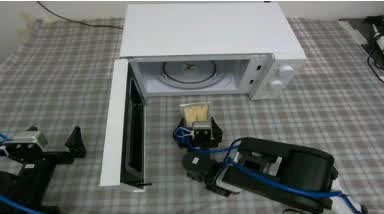
For someone making lunch, the movement would hardly be worth mentioning. For a system controlling two robotic arms, this was precisely where the interesting part of the experiment began. The gripper had already released the sandwich. Now empty, it could serve another purpose—as a pusher.
Cortex AI Research published the footage on 17 September 2026. The team compared three models: GPT-6 Astra, Gemini 3.8 Flash and Fable 5.1. All three received an overhead view, footage from both wrists and depth data. They had ten minutes for each task. In the footage shown, Astra controls the arms.
The second task required an even more precise movement. The robot had to attach a tip five millimeters wide to a laboratory pipette. The footage shows several failed attempts before the tip fitted into place.
How the robot closed the microwave
Cortex AI Research · 2026-09-17
Laboratory experiment · robotic arms controlled by GPT-6 Astra
Open the original video ↗AI Revolucija Analysis:
What does it mean to understand that a task is finished? The instruction was to close the door. The difference between a movement and its effect became visible only when the robot moved its arm away. For a person entrusting work to such a system, the ability to check the consequences is exactly what matters.
The footage shows a selected successful attempt in a laboratory. It does not allow an assessment of how often the robot would succeed in someone else’s kitchen.
Sources and verification
About this article
Report type: LABORATORY DEMONSTRATION.