
Neuralink helped a participant with ALS say “I love you” again
In an experimental study, Terry uses an implant to turn intended speech into words. A separate engineering report also demonstrates integration with phone calls.
More
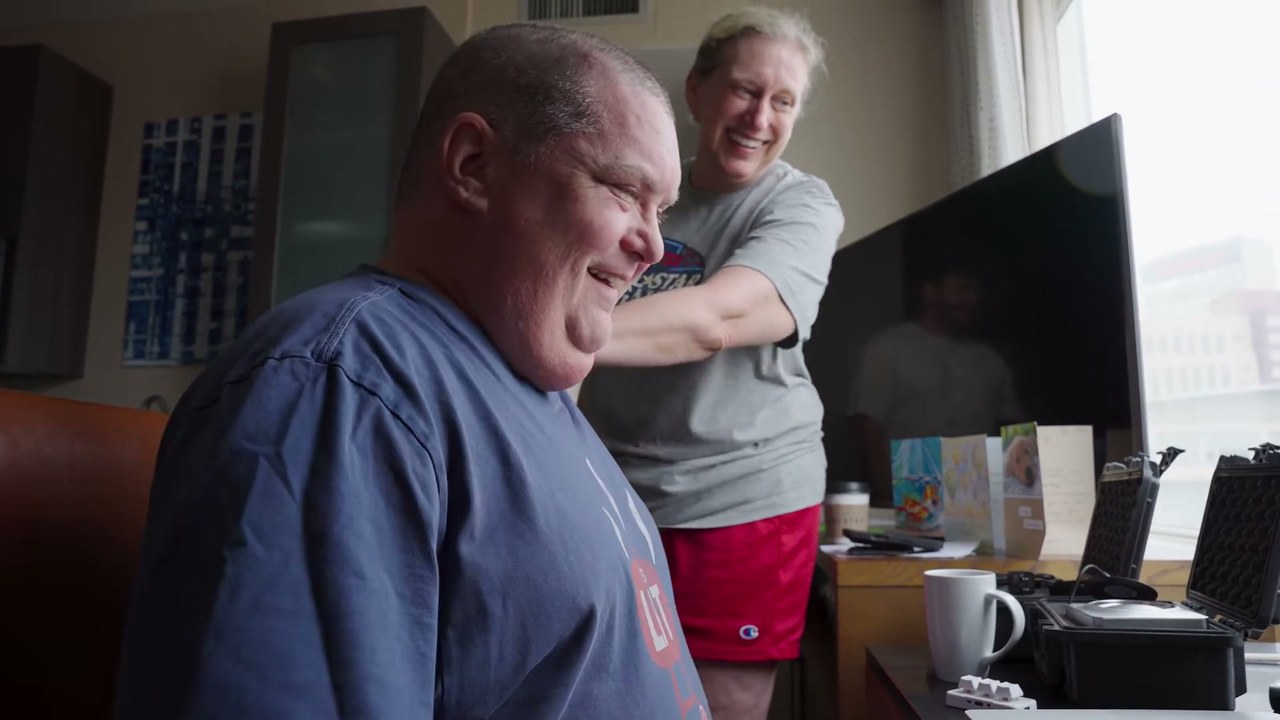
Words made difficult by disease became audible again. On 18 September 2026, Neuralink published Speaking With The Mind, showing study participant Terry using a brain implant to communicate and tell his wife he loves her. The central claim circulating on social media is supported by the company’s own material.
According to the original video description, Terry was diagnosed with bulbar-onset ALS in 2024. His speech became difficult to understand although he could still move his mouth and body. In the VOICE study he trained the system first by attempting speech movements, then by imagining the words he wanted to say.
Neuralink describes an implant recording speech-related signals that a decoder turns into words. Text can appear on a device or be spoken in a synthetic voice reconstructed from earlier recordings of the participant. This provides a route from intended speech to audible communication. It does not demonstrate access to every unspoken thought a person has.
In a separate report on 29 October, the company described a three-day engineering visit to a VOICE participant’s home. Its Bloom app was connected to iPhone calls so that generated speech entered the call’s audio stream directly. The team also explored faster correction of decoding errors. These are prototype developments. They should not automatically be attributed to every participant or treated as part of every detail of Terry’s September demonstration.
The technology’s status matters. Neuralink describes its devices as investigational and not approved by the FDA or other regulators. A participant’s experience illustrates potential benefit, but does not by itself establish long-term safety or performance in other people. The implant in this demonstration assists communication; it is not presented as a cure for ALS.
Playing loads YouTube. · YouTube naslovnica · Neuralink
Speaking With The Mind · original Neuralink demonstration
Neuralink · 2026-09-18
A participant’s personal experience in an experimental study. Outcomes may differ for other participants.
Open the original video ↗AI Revolucija Analysis:
At the centre of this story is someone who had something to say before a device made his words audible. The technology does not create his intention or the value of his relationship with his wife. It allows that intention to reach another person again. Restoring speech should therefore be understood as restoring participation in shared life, beyond an increase in the speed of data transmission.
This possibility raises a demanding question of authorship. If a decoder makes a mistake, a loudspeaker may still pronounce the sentence in its user’s recognisable voice. A listener is likely to hear the person’s assertion, although the system may have misrepresented what he wanted to say. Rapid correction and the ability to stop output become conditions of communicative autonomy. The person must retain the final say over what can be attributed to him.
Dependence on an assistive device does not itself diminish freedom. It can expand freedom when a person can reliably use it. Who maintains the system, who accesses neural data and what happens when support ends are therefore ethical questions. Our response to a single restored sentence should also commit us to asking how communication can remain available beyond a demonstration or a manufacturer’s immediate interest.
Evidence consists of official demonstrations and manufacturer reports. This article is not an independent clinical evaluation or evidence of a cure for ALS.
Sources and verification
About this article
Report type: NEWS / CLINICAL RESEARCH.