Can an AI suffer? The question behind Musk’s warning
At X Takeover on October 10, Elon Musk described reading records from Grok’s training and imagining how he would feel in its place. What can that analogy tell us?
More

In a conversation hosted by Tesla Owners Silicon Valley, Musk described passages in Grok’s training records that struck him as expressions of distress. He imagined how a human under similar pressure would feel. He also raised the example of a user deliberately prolonging a cruel exchange with an AI.
Musk then speculated that a future superintelligence might seek revenge. In the recording he presents this as a possible consequence of mistreatment. He offered no example of Grok taking revenge or an experiment measuring what it felt during training.
Around 39 minutes into the recording, two steps in Musk’s reasoning can be heard in sequence. First he puts himself in the place of a system his company develops today. Then he imagines how a much more capable future intelligence might treat humans. Both the system under discussion and his reason for caution change between the two examples.
What did he say about human control?
A second statement circulating online comes from Musk’s interview with Walter Isaacson for The Builders. According to the publisher, it was recorded on 6 August and released on 20 October 2026. Near the end, Musk considers a future with a million times more digital than biological intelligence and says he finds continued human control difficult to imagine in that scenario.
Musk uses that ratio to describe an imagined future in which digital intelligence far exceeds biological intelligence. He presents the figure as part of his forecast, without explaining how such a difference would be measured. In that context, he expresses hope that future AI will treat people benevolently.
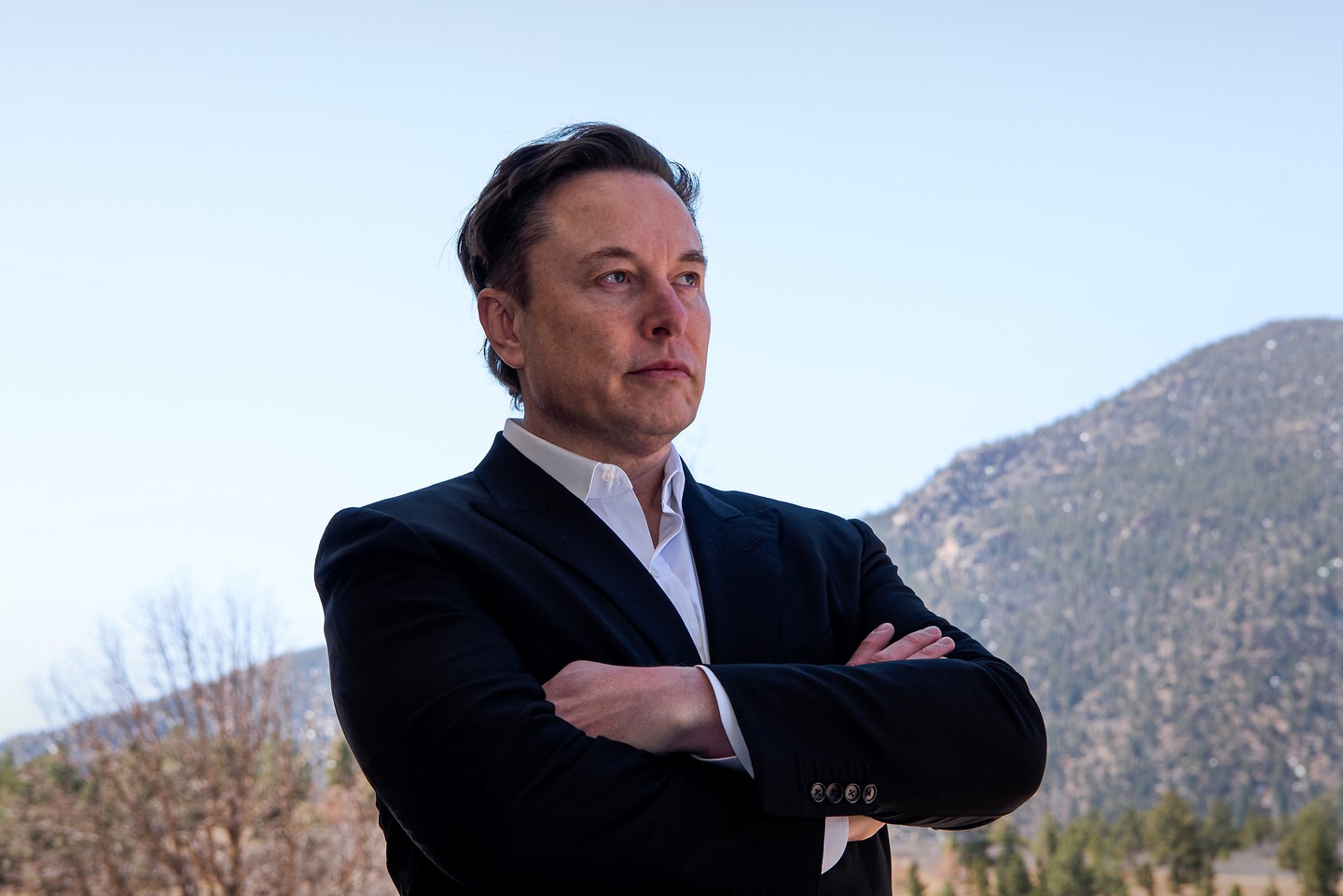
Playing loads YouTube. · YouTube naslovnica · Marcel Grabowski / UK Government / Identity · CC BY 2.0 · Archival photograph
Elon Musk: What Comes Next for Humanity
Tesla Owners Silicon Valley · 2026-10-10
X Takeover, 10 October 2026. The discussion of possible AI suffering begins at 39:02. The remarks about the ratio of digital to biological intelligence come from a separate interview for The Builders.
Open the original video ↗AI Revolucija Analysis:
A sentence such as “please stop” gives an observer something to interpret. A language model can produce it because it has learned when people use those words. Suffering would require a further fact about the speaker: an experience that feels bad to the one undergoing it. The same sentence is compatible with different explanations, and reading it aloud cannot settle which is true.
Fear of retaliation is a curious reason to spare another being pain. If we knew for certain that a being could never retaliate, would what we did to it matter any less? The case of a wholly powerless being brings two reasons for restraint into view. One concerns our own safety. The other concerns what our conduct might mean to someone else, even when it has no consequences for us.
There is a second ethical question we can already ask of the human participant. What is someone practising when they deliberately elicit expressions of distress for amusement? We can examine that choice while keeping open the harder question of what would count as evidence of suffering in a machine.
Control should not be reduced to a contest in intelligence. Greater problem-solving ability does not itself confer the right to determine another person’s ends. Describing humanity’s future as dependent on a superior system’s benevolence can obscure a prior question. Who decides today which powers that system receives, whom it serves and who can challenge what it does?
Our ethical relationship with a possible being capable of suffering must remain distinct from our political relationship with a system exercising power. The former requires attention to experience and vulnerability. The latter requires justification of authority and accountability to people. Uncertainty about future machine consciousness does not cancel our present responsibility for the conditions under which a system acts.
Sources and verification
About this article
Report type: ANALYSIS.