
LeCun and Balestriero: better data pairs could bring language and images closer together
A new preprint examines when different AI models develop similar internal representations of the same scene and how much the choice of data matters.
More
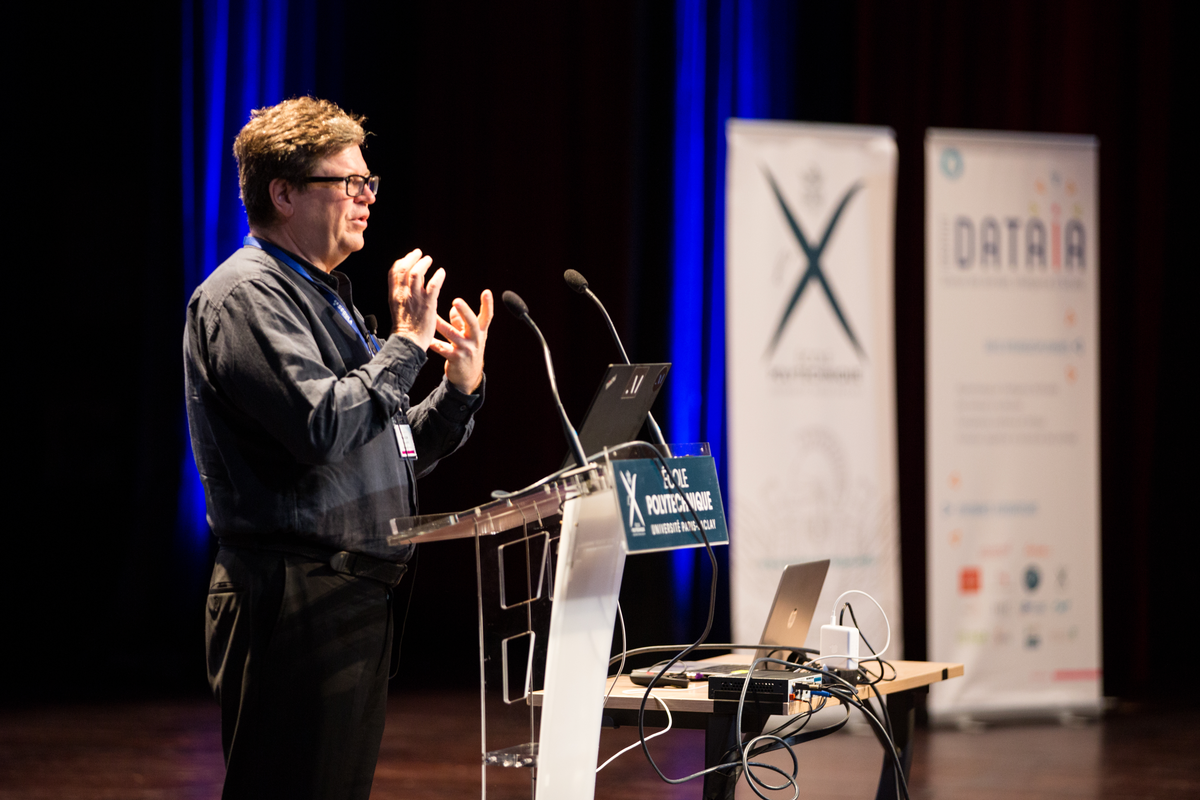
In a paper published on 29 October, Randall Balestriero and Yann LeCun connect a mathematical result with experiments on JEPA architectures. Different views of the same scene — for example, two descriptions of it — are key. Under certain assumptions, such pairs allow models of different modalities to learn comparable representations.
The authors report that, in one particular experiment, their text JEPA achieved comparable alignment with a visual model using 21.6 million examples, versus 900 million for next-token prediction. That is approximately 42 times fewer examples in that measurement. What is measured is the similarity of internal representations of images and text, not general intelligence or alignment with human values.
AI Revolucija Analysis:
The finding raises a practical question: can more careful design of examples replace some of the scaling of models and data volumes? In this task, the choice of pairs emerges as an important research direction.
This is a preprint reporting the authors’ results. The mathematical conclusion depends on assumptions, and the result on the specific protocol; it does not prove that JEPA outperforms LLMs in conversation, reasoning, or every application.
Sources and verification
About this article
Report type: SCIENTIFIC PREPRINT / AUTHORS’ RESULTS.