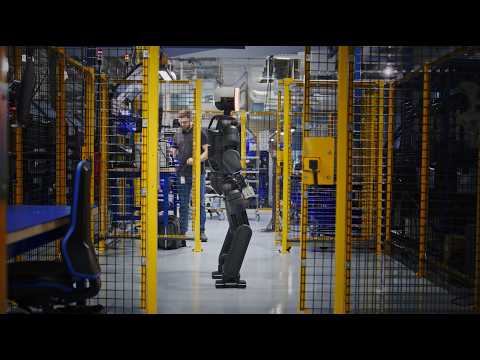
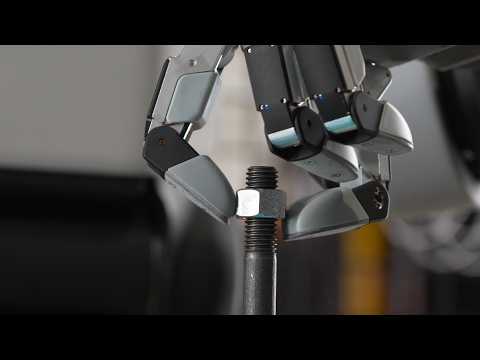
Atlas takes to wheels and spins in mid-air. How did a human jump become a robot skill?
Boston Dynamics engineer Andy Wu explains how Atlas used its wheels to prepare for takeoff.
More
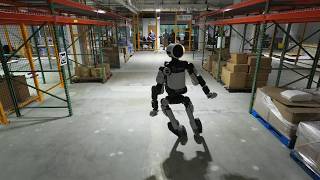
In a dim factory hall, Atlas crouches, jumps and completes a full turn in the air. It rolls away after landing. In another sequence it lifts one leg and holds its balance on the other. In footage supplied by Boston Dynamics and covered by South Korean broadcaster SBS on November 11, the telling detail is at floor level. Where you might expect feet, Atlas has wheels.
The engineers began with a recording of a person performing a 360-degree jump. Motion capture provided a trajectory that a controller could learn to follow in simulation. According to controls engineer Andy Wu, the jump worked on the first attempt on the physical robot. That attempt followed extensive virtual training.
What changes when a foot can roll?
A skater and a wheeled robot cannot count on the same contact with the floor. As the robot transfers its weight, its point of support can roll. Reproducing a knee angle or the lean of the torso would only take it so far. Wu describes Atlas rolling its lower body into position just before pushing off. The wheels became part of its preparation for the jump.
A successful landing tells us what happened on that run. Establishing reliability would require repeated attempts on different surfaces and a record of what happened when landings went awry. The broadcast identifies Boston Dynamics as the source of the footage.
AI Revolucija Analysis:
Why do we recognise the movement as skating? We have seen a human body connect a windup, a turn and a landing in much the same rhythm. That familiarity helps us read the scene, but it can mislead us about how the movement arose. A skater can describe the sensation of her weight shifting on landing. The evidence we have for Atlas concerns its motion and its training. The experiment leaves the question of experience untouched.
The most revealing part is where Atlas departs from the human example. The jump offered an initial instruction. Executing it with a differently built body required another solution. The wheel at the end of the leg tells us more about that learning than the familiar outline of the humanoid.
Sources and verification
About this article
Report type: NEWS.