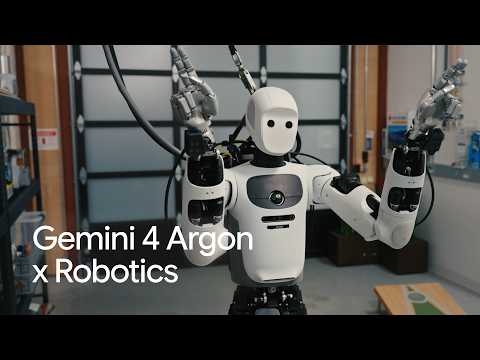
Apollo 2 sorted parts in two Mercedes factories. How reliable was it?
Google DeepMind reports a 96% success rate on a parts-sorting task in Germany and Hungary.
More
At Mercedes-Benz plants in Kecskemét, Hungary, and Sindelfingen, Germany, Apollo 2 picked metal brackets from supply bins and placed them in the order required for each vehicle. Google DeepMind reported the result on November 10.
Apptronik built the humanoid. One DeepMind model tracked the workflow while Gemini Robotics 2.5 controlled its arms and hands. Choosing the right bracket and placing it in the right slot are distinct skills.
In separate tests, the model closed a toolbox lid in 93% of attempts and swept debris into a dustpan in 52%.
Parts must reach a workstation in the order in which they will be fitted. Imagine two consecutive vehicles that require different brackets. Even if both brackets are present, reversing them obliges a worker to stop and identify the right one. What happens after the robot lifts a part matters as much as the initial grasp.
DeepMind’s wider evaluation covered some 200 tasks, including tying a bow on a gift box, serving food with tongs and transferring liquid with a pipette. Each tests a different skill. A ribbon changes shape as the robot pulls it, while tongs must hold food firmly enough to lift it without damage. Repeating the factory task across several shifts would tell a manufacturer more than an average across these laboratory exercises.
AI Revolucija Analysis:
An empty slot is easy for the next worker to spot. The wrong bracket in the right slot can be harder to detect. Both may count as one failure while imposing quite different costs. Knowing how often Apollo catches its own errors, and how long workers spend checking trays, would tell us more about the workload it actually removes.
The reported rate applies to the pilot task.
Sources and verification
About this article
Report type: NEWS.