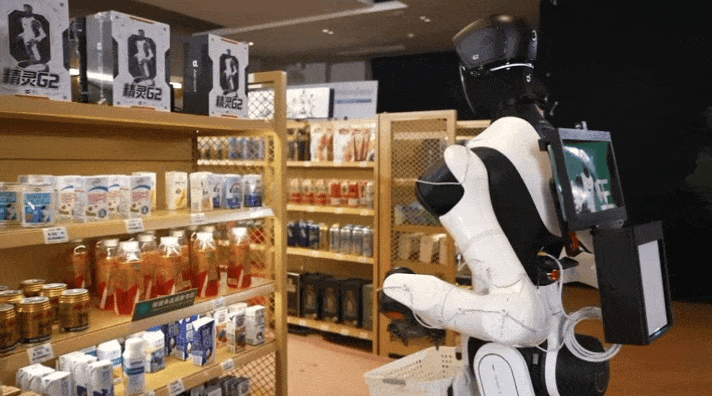
AGIBOT A3 Ultra: a humanoid designed to welcome visitors and talk to customers
Standing 174 centimetres tall, the robot is intended for reception, guided tours and customer interaction. AGIBOT offers it as a platform for commercial and service environments.
More

Welcoming visitors, guiding them through a space and answering their questions are among the roles AGIBOT envisages for its A3 Ultra humanoid. The company presents it as a platform for commercial and service environments, where a human-like form and conversational interaction are intended to make contact with users easier.
According to the manufacturer, A3 Ultra stands 174 centimetres tall, weighs 60 kilograms and has a standard battery life of eight hours. Listed applications include reception, guided tours and customer interaction. These roles require a robot to combine movement through a space with information useful to the person in front of it.
Such deployment requires more than delivery of the hardware. AGIBOT says illustrated applications may require additional development, model integration, environment configuration and validation. Customers are asked to confirm configuration and delivery conditions separately. The role of an individual robot will therefore depend on how it is prepared for a particular workplace.
For example, a guided tour would require coordination of the route, explanatory content and the response when a visitor needs help outside the planned programme. This is a practical requirement of that application, rather than an account of independently verified A3 Ultra performance. The stated battery life likewise does not establish how long the robot would operate under every combination of tasks.
The commercial appeal of a humanoid lies in making technology a visible conversational partner, rather than a screen users must locate and activate themselves. Yet deploying such a device requires answers to concrete questions: which tasks it performs, when an employee takes over and how incorrect information is handled. A3 Ultra availability and deployment conditions in Croatia remain unconfirmed.
AI Revolucija Analysis:
In a service environment, a robot’s human-like appearance may make an initial encounter easier while also encouraging trust that is unrelated to reliability. A visitor may experience the conversation as an exchange with an employee, although the answers come from a system whose limits they do not know. Ethical responsibility therefore begins with a clear explanation of the robot’s role and straightforward access to human assistance.
Introducing a humanoid would be justified if it gave employees more time for visitors’ complex needs. If the robot instead became the only gateway to a service, people uncomfortable with that interaction could face further exclusion. The measure of progress is therefore not how closely the robot resembles a person, but how accessible and accountable the institution remains to the people it serves.
Specifications and intended applications are supplied by the manufacturer; performance in a particular workplace depends on configuration and validation. Availability in Croatia is unconfirmed.
Sources and verification
About this article
Report type: ANALYTICAL EXPLAINER.