
Health and biology · Paper review
When patients can talk to their EEG
Nature Medicine · Original research paper · peer-reviewed · 13 October 2026 · 1 min readBy: AI Revolucija editorial team
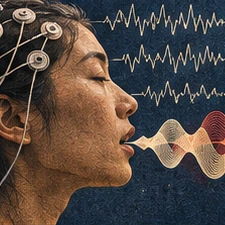
IN BRIEF
- Thirteen hospitalized people with epilepsy used an app that connected EEG data with a language model.
- They exchanged 1,307 messages: participants could ask about the data and annotate alerts.
- The single-center observational study was brief.
What the research shows
Thirteen hospitalized people with epilepsy used an app that connected EEG data with a language model. They exchanged 1,307 messages: participants could ask about the data and annotate alerts. Separate simulations of subsequent detector adaptation showed fewer false alarms thanks to patient feedback.
Scope and limitations
The single-center observational study was brief. Detector improvement was tested in simulation, not as evidence of more effective treatment. Neither fewer seizures nor the long-term safety of home use was demonstrated; standard treatment was not changed.
AI Revolucija analysis
Editorial reflection: a conversational interface can give patients access to their own measurements. Autonomy here means understandable information and the ability to verify it, with clearly defined responsibility for the healthcare team.
A question to consider
How can we explain to patients what the system knows and what it is still uncertain about?
Original publication
Human–artificial intelligence collaboration for comanaging epilepsy in real time
Zack Goldblum, Haoer Shi and colleagues
Nature Medicine · 13 October 2026
FACT CHECK
Review of the abstract, results, and available portion of the original paper’s discussion; not all supplementary material was reviewed.