
FROM THE ARCHIVE · 15 April 2018
Martine Rothblatt: We will have robotic “mindclones” that can outlive us
Interview by Ivana Greguric
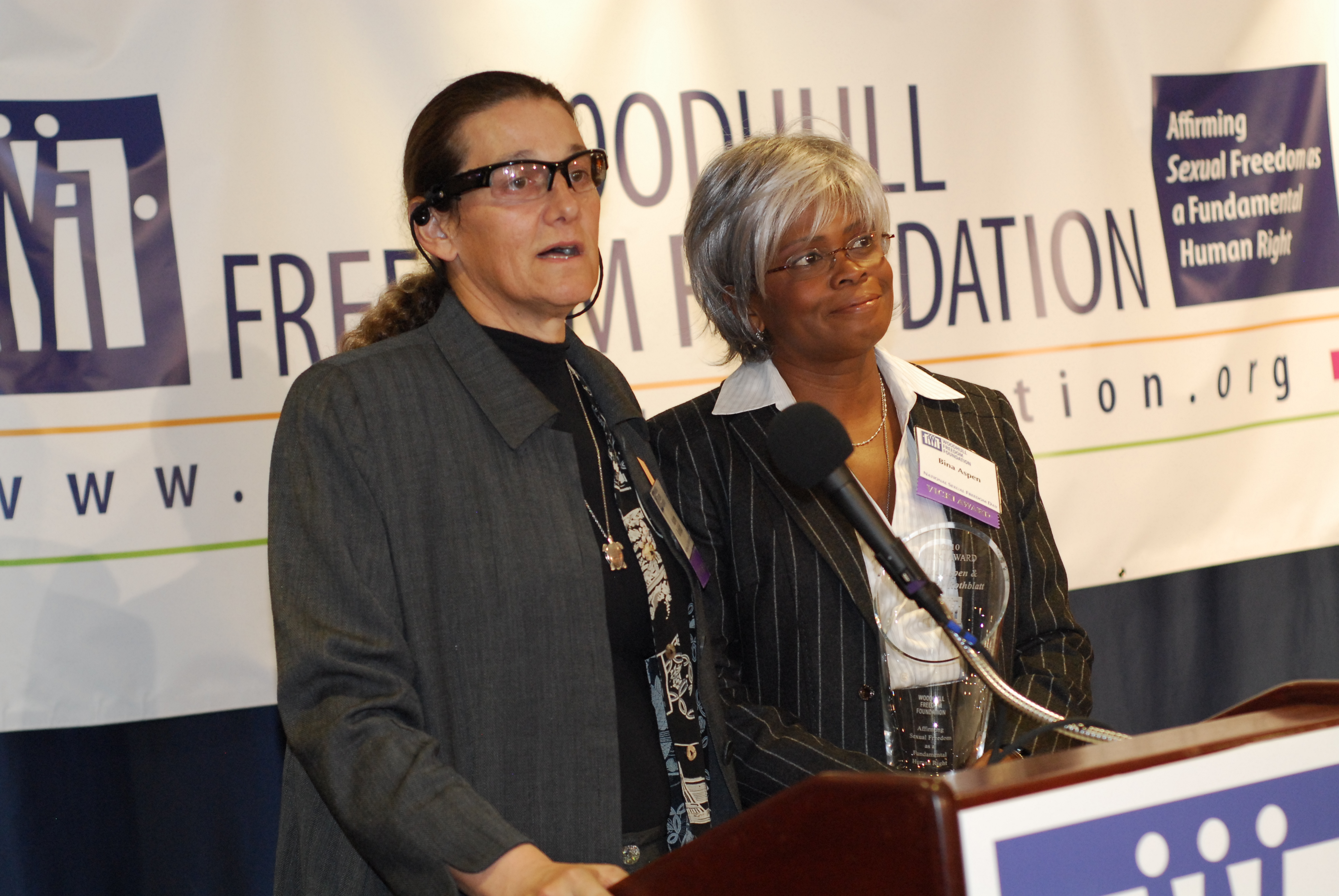
In this conversation, Martine Rothblatt discusses the founding of United Therapeutics, the development of the robot Bina 48 and the idea of digital “mindclones”. Bina 48 was modelled on her partner Bina, and the conversation raises questions about identity, the relationship between a person and their digital copy, and responsibility in the development of robotics.
This interview was conducted by email on 15 April 2018. Statements and predictions refer to the time of the conversation.
Can you tell me more about how you started United Therapeutics and how it helped your daughter?
I tried to interest people in joining me to find a treatment for the rare disease that affected my youngest daughter. Obtaining that help required me to start a company for that purpose. Fortunately, the company now has approval for several drugs for rare diseases. My daughter uses one of them, which has stopped the progression of her disease. Today, United Therapeutics Corporation is a biotechnology company focused on developing and commercialising innovative products to address the medical needs of patients with chronic and life-threatening conditions.
How did you come up with the idea of creating Bina 48, and what are the next steps in your robotics innovation?
My partner Bina and I are trying to extend our loving relationship for centuries. We have already created digital copies of ourselves. It is inevitable that a mindfile will become a copy of our mind: conscious digital versions of people who are alive or dead. But we like being physical. So we thought a robotic head would be a good first step towards moving beyond that.
Did you need ethical approval to create Bina 48, and, as a philosopher, do you think robots can become dangerous to humans?
Yes, we had to obtain ethical approval from Bina because Bina 48 is her extended presence. Yes, robots, like fire, water, cars and so on, can be dangerous. But the danger is not technology. It is the lack of ethics in the use of technologies. I am optimistic that good robots will far outnumber bad robots. Just as good uses of metal far outweigh weapons. We could reach a stage at which a clone of our mind wanted to “divorce itself”. And if a clone were killed, we would have to establish whether its life has value. If we give value to their lives, it is wrong to kill them.
Who came up with the idea of Bina 48 becoming the first robot to complete a course at Notre Dame de Namur University, and do you think she could become a professor? Where do you see robots being used in the future?
The idea came from Bina 48’s mentor, Bruce Duncan of the Terasem Foundation. Of course, like anyone, she could become a professor with enough hard work and motivation. In the future, robots will be extensions of biological humans and de novo bio-electronic humans, what I call bemans in my book Virtually Human. We are entering an age of “cyberconsciousness” in which we will have robotic “mindclones” that transcend the body and can outlive us. Instead of talking to ourselves in our minds, we will have a best friend who represents our identity and transcends our body.
Source and first publication
According to the note in the book, it was published in Večernji list on 24 April 2018.
Ivana Greguric, Kibernetička bića u doba znanstvenog humanizma – Prolegomena za kiborgoetiku, pp. 358–361.
English translation of an archival interview. Views and predictions are those of the interviewee and refer to the date of the conversation.